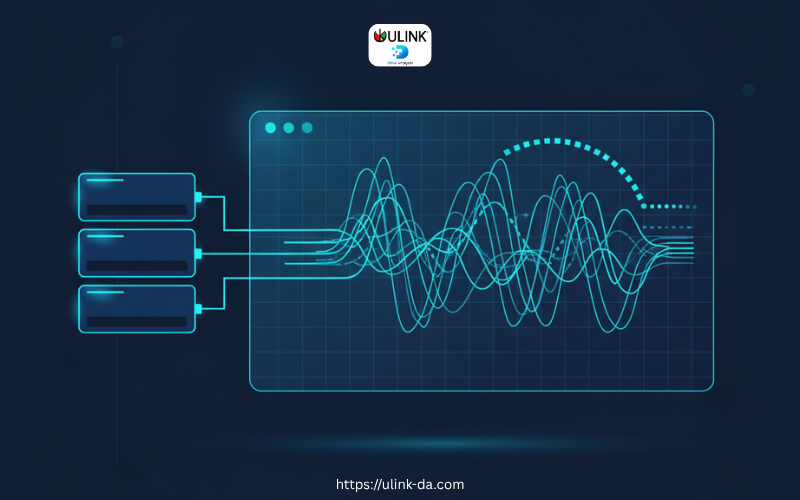
Storage reliability has traditionally been approached through monitoring and response. Systems are deployed, metrics are tracked, and alerts are triggered when predefined thresholds are crossed. This model has been widely used to manage storage environments across enterprises.
However, as storage infrastructure continues to scale across data centers and distributed environments, there is a growing need to look beyond threshold-based monitoring and understand how drive behavior changes over time.
This is where AI-based analysis is changing how storage reliability is approached.
Failure Develops Over Time
Drive failure is often treated as a single event. Monitoring systems typically reflect this by signaling when a parameter crosses a defined threshold or when a drive transitions from a “pass” to a “fail” state.
In practice, drive behavior changes progressively.
Drives exhibit early signals such as variations in error patterns and operational behavior. These signals may not immediately trigger alerts but can form patterns over time. As these patterns develop, they can indicate increasing risk before a final failure occurs.
Understanding this progression is key to gaining earlier visibility into drive condition.
Limitations of Threshold-Based Monitoring
Technologies such as S.M.A.R.T. provide a widely used method for assessing drive health. However, they are based on predefined thresholds and individual parameters.
This results in a binary view of drive condition:
- Pass
- Fail
While useful, this approach does not capture how drive behavior evolves between these states.
Early signals may exist but remain below threshold levels. Without a way to connect and analyze these signals over time, they may not be recognized as part of a larger pattern.
AI-Based Multi-Signal Analysis
ULINK has introduced an AI-powered tool, DA Drive Analyzer, which uses a different approach to analyze multiple drive health indicators together rather than in isolation.
Instead of focusing only on whether a single parameter has crossed a limit, AI models evaluate:
- Trends in error behavior
- Changes in drive performance patterns
- Relationships between multiple signals
This allows for the identification of patterns that are not visible through individual metrics alone.
By tracking how these signals evolve over time, AI provides a more structured view of drive behavior.
From Signals to Patterns
One of the key differences in this approach is how data is interpreted.
Traditional monitoring surfaces individual alerts. AI-based analysis connects signals into patterns.
For example:
- Isolated errors may not trigger alerts
- Repeated or evolving error patterns can indicate change
By identifying these patterns early, it becomes possible to detect signs of degradation before threshold-based alerts are generated.
This provides additional visibility into how drive conditions are changing.
Earlier Detection of Drive Behavior Changes
By focusing on trends and pattern development, AI-based systems can identify changes in drive behavior earlier compared to threshold-based monitoring.
This earlier detection provides:
- Additional time to review drive condition
- The ability to plan actions such as backup or replacement
- A more informed view of which drives may require attention
Rather than waiting for a failure alert, teams can act based on observed progression.
A Structured View of Drive Condition
AI-based analysis helps move from isolated data points to a more structured understanding of drive health.
Instead of evaluating drives only at the point of failure, this approach considers:
- How signals appear
- How they develop into patterns
- How those patterns indicate increasing risk
This provides a continuous view of drive condition based on observed behavior over time.
Applying AI to Storage Reliability
Platforms like ULINK DA apply AI to analyze drive behavior using multiple signals and trend tracking.
The focus is on:
- Monitoring changes in drive behavior over time
- Identifying patterns across multiple indicators
- Detecting early signs of failure progression
This approach complements existing monitoring methods by adding a layer of analysis that focuses on how drives behave, not just their final state.
Conclusion
Redefining storage reliability with AI is not about replacing existing monitoring systems. It is about extending how drive health is understood.
By moving beyond threshold-based checks and focusing on multi-signal analysis and trend tracking, AI provides a way to detect changes in drive behavior earlier.
This allows infrastructure teams to better understand how failure develops over time and take action based on observed patterns, rather than only responding to final-state alerts.
Predict Drive Failure Before It Happens with Our Drive Health Checker
AI-powered drive health monitoring and diagnostic software for HDD & SSD drives on Windows PC, ASUSTOR NAS, and QNAP NAS
Try DA for Windows PCTry DA for ASUSTOR NASTRY DA for QNAP NAS